

Khajuraho
Where Stone Celebrates Life
Discover Khajuraho
Where Stone Celebrates Life
About Khajuraho
Khajuraho is a remarkable temple landscape in which soaring towers and intricate sculpture present an expansive vision of medieval Indian life, devotion and artistry. The surviving Hindu and Jain temples reward close observation far beyond the small proportion of carvings for which the destination is popularly known.
History and legacy
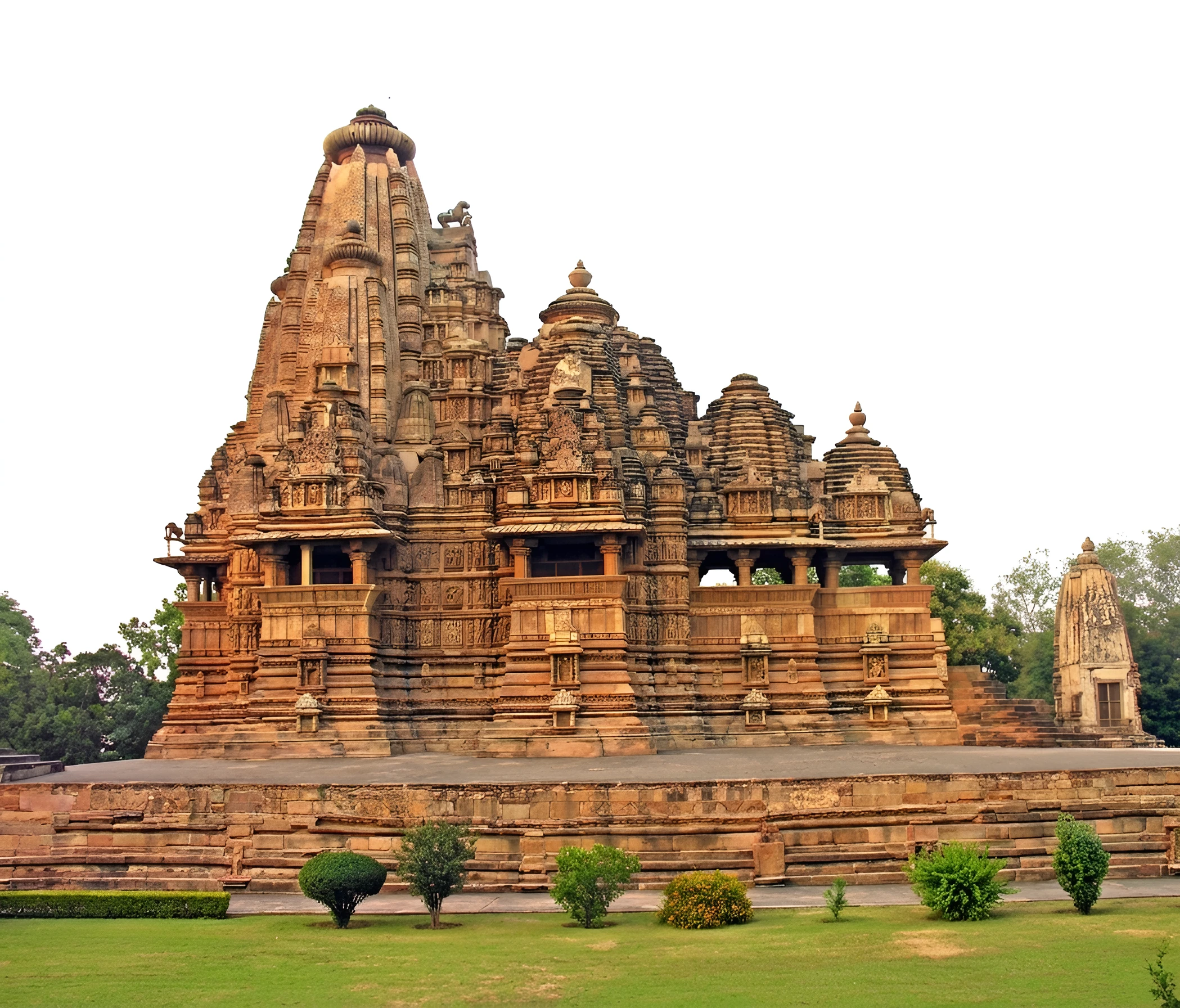
The temples were built under the Chandela dynasty between the ninth and twelfth centuries. Once part of a much larger sacred landscape, the surviving monuments are organised into western, eastern and southern groups and demonstrate exceptional Nagara-style architecture.
Culture and character
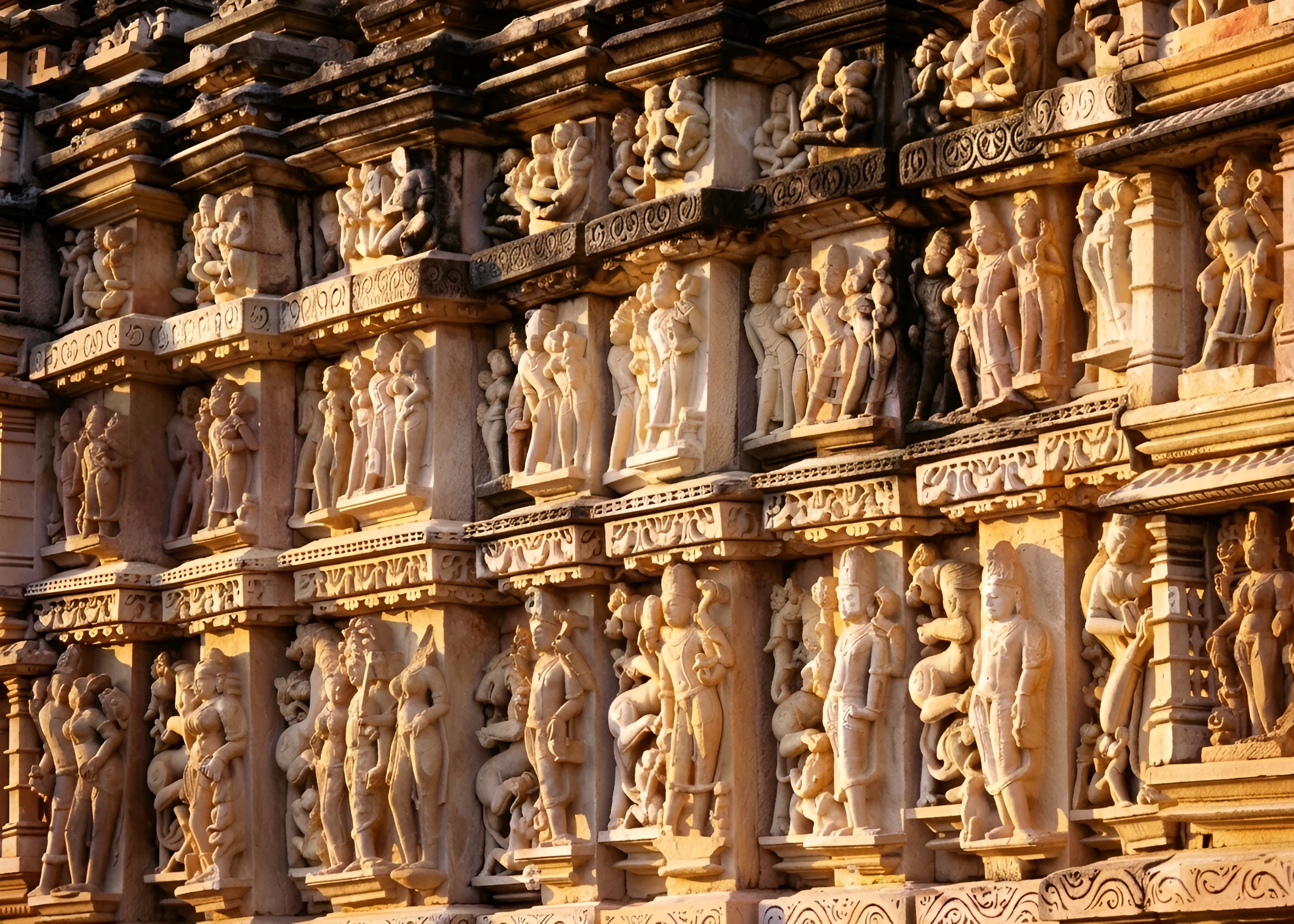
Khajuraho’s sculpture includes deities, musicians, dancers, warriors, animals and scenes of everyday life. Jain and Hindu traditions coexist across the site, while the Khajuraho Dance Festival connects the historic setting with India’s classical performing arts.
Destination facts
- 01
The Khajuraho Group of Monuments is a UNESCO World Heritage Site.
- 02
The surviving temples include both Hindu and Jain monuments.
- 03
The Western Group contains major temples such as Kandariya Mahadeva and Lakshmana.
- 04
The sculpture represents religion, court life, music, movement and ordinary human experience.
Look beyond the famous details
Use a qualified guide or reliable interpretation to understand the architecture and symbolism. Visit more than one temple group, observe the carvings in context and avoid reducing the destination to a single category of sculpture.
Itineraries Featuring KHAJURAHO
Why We Love Khajuraho
Soaring temple towers, intricate sculpture and open skies. Khajuraho celebrates life in extraordinary stone.
Temple Towers Rise Like Mountains
Clustered spires create some of India's most elegant sacred silhouettes.
Stone Filled With Movement
Sculptures portray deities, dancers, musicians and scenes of daily life.
Design With Perfect Rhythm
Platforms, halls and rising roofs create carefully balanced compositions.
The Chandela Vision Survives
The temples reflect the ambition of a powerful medieval kingdom.
Dance Returns to the Temples
A major festival brings classical performance into the heritage landscape.
Warm Light Across Sandstone
Late afternoon reveals the depth and detail of the carvings.
Temples of the Chandela Rulers
Most Khajuraho temples were built between the tenth and eleventh centuries under Chandela patronage. Hindu and Jain complexes formed a much larger sacred landscape.
Only Part of the Temple City Survives
The surviving monuments represent only a portion of the many temples believed to have once stood across the Khajuraho area.